

Healthy Teeth Support a Healthy Life

Caring for your pet’s teeth goes far beyond appearance. Dental disease can affect comfort, appetite, and even internal organs if left untreated. Our team focuses on early detection and proactive dental care to help keep your pet feeling comfortable and healthy at every stage of life.
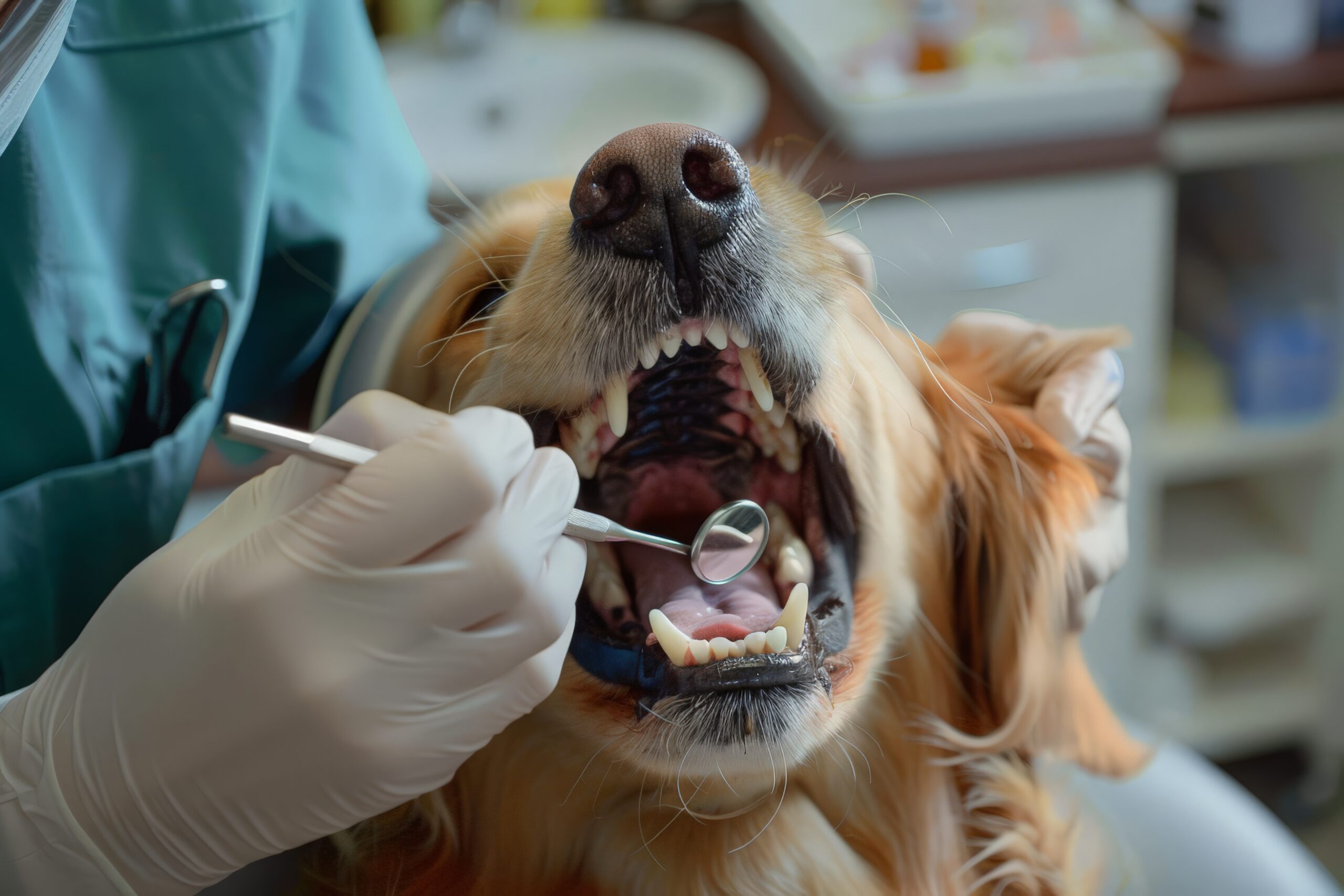
Professional Dental Cleaning

Comprehensive care for a cleaner, healthier mouth

Our dental cleanings are designed to thoroughly remove plaque and tartar while protecting your pet’s safety and comfort. Each procedure begins with digital dental X-rays to evaluate what’s happening beneath the gum line.

We then carefully clean above and below the gums using specialized equipment, followed by polishing to smooth tooth surfaces and help slow future buildup. This process allows us to identify concerns early and support long-term oral health.

Advanced Dental Services

We also offer Solutions for complex dental conditions

In addition to routine cleanings, we offer treatment for more advanced dental concerns. Our team is experienced in addressing periodontal disease, oral infections, damaged teeth, and other dental conditions.

When appropriate, we may recommend procedures such as extractions or restorative treatments to relieve pain and protect your pet’s quality of life. Each treatment plan is tailored to your pet’s specific needs.

Dental Health Assessment

A careful, thorough oral evaluation at every visit

Every dental visit includes a detailed examination of your pet’s teeth, gums, tongue, and surrounding tissues. This comprehensive assessment helps us identify potential issues early and create a personalized treatment plan designed to support lasting oral health.

Home Dental Care Education

Supporting oral health between visits

Consistent care at home is essential for maintaining dental health between professional cleanings. Our team takes time to demonstrate brushing techniques, discuss at-home care routines, and recommend dental products that may be right for your pet.

With the right guidance, you can play an active role in preventing dental disease and keeping your pet comfortable year-round.

Frequently Asked Questions: Dental Care & Oral Surgery

Periodontal disease is the most commonly diagnosed condition in adult dogs and cats. By age three, the majority of pets already have some degree of it. These questions cover what a professional dental cleaning involves, why anesthesia and dental X-rays are part of it, and how to care for your pet’s mouth at home.

Because a real dental cleaning is a medical procedure, not a cosmetic one. The disease that matters happens below the gumline, where plaque bacteria destroy the attachment between tooth and bone. Cleaning that area requires probing every tooth surface, scaling under the gumline, taking X-rays, and — often — extracting diseased teeth. None of that is possible in an awake animal.

General anesthesia also protects your pet’s airway. A cuffed endotracheal tube keeps water, bacteria, and tooth debris out of the lungs, and it allows us to deliver oxygen throughout the procedure. Awake scaling risks aspiration, fractured teeth, jaw injury, and a great deal of fear for an animal who does not understand what is happening.

Modern veterinary anesthesia is individualized: pre-anesthetic exam and bloodwork, an IV catheter and fluids, drug protocols chosen for that patient, and continuous monitoring of heart rate and rhythm, blood pressure, oxygen saturation, carbon dioxide, and temperature by a dedicated technician.

I’ve seen it offered at groomers and pet stores. We don’t offer it, and neither the American Veterinary Dental College nor the American Animal Hospital Association supports it. Scraping visible tartar off the crown makes the tooth look white while leaving the diseased pocket underneath untouched — the part that causes pain, bone loss, and tooth loss. It also removes the visual evidence that would have prompted an owner to seek real treatment.

Hand scaling an awake patient leaves microscopic scratches on the enamel that plaque adheres to more readily, and it cannot be done thoroughly on the inner (tongue-side) surfaces of the teeth. The result is a cleaner-looking mouth with the same or worse underlying disease.

A complete oral health assessment and treatment — often abbreviated COHAT — generally follows these steps:

  • Pre-anesthetic physical exam and bloodwork;
  • IV catheter placement, intravenous fluids, and pre-medication including pain control
  • Induction and intubation with a cuffed endotracheal tube; continuous multi-parameter monitoring and active warming
  • Full-mouth dental radiographs
  • Charting of every tooth: probing depths, gum recession, mobility, furcation exposure, fractures, resorptive lesions, masses
  • Ultrasonic and hand scaling above and below the gumline, followed by polishing and a final rinse
  • Treatment of any problems found — extractions, gingival flaps and suturing.
  • Recovery with a close monitoring until the pet is awake, warm, and comfortable
  • A discharge appointment with home care instructions

Because the treatment plan depends on what the radiographs and probing reveal, we call you during the procedure if anything beyond the estimated plan is needed.

Roughly two-thirds of each tooth sits below the gumline, and that is where most dental disease lives. Studies of dogs and cats with teeth that looked normal on visual exam found clinically important findings on radiographs in a large share of patients — and in mouths that already looked abnormal, X-rays changed the treatment plan in most cases.

Radiographs are the only way to identify tooth root abscesses, retained roots, unerupted teeth, dentigerous cysts, bone loss from periodontal disease, jaw fractures, tooth resorption in cats, and bone tumors. Extracting a tooth without a radiograph also risks leaving a fragment of root behind, which can become a source of chronic pain and infection.

Animals almost never stop eating because of dental pain. Survival instinct is stronger than discomfort, and the change happens so gradually that owners rarely notice. Pets with severely diseased mouths routinely eat normally the day before a procedure — and then act like they are years younger a week afterward.

The signs we look for instead: bad breath, tartar and red gum margins, bleeding when chewing, dropping food or chewing on one side, pawing at the face, decreased grooming in cats, a preference for softer food, or simply being less playful.

Veterinary dentistry uses a four-stage scale based on how much of the tooth’s bony attachment has been lost:

  • Stage 1 — gingivitis only. The gums are inflamed but no attachment is lost. This stage is fully reversible with cleaning and home care.
  • Stage 2 — early periodontitis, under 25% attachment loss.
  • Stage 3 — moderate periodontitis, 25–50% attachment loss.
  • Stage 4 — advanced periodontitis, more than 50% attachment loss. These teeth usually cannot be saved.

The stage is assigned per tooth, not per mouth, which is why one pet’s plan may include cleaning for most teeth and extraction of a few.

Sometimes it can. Root canal therapy, vital pulp therapy, and crown restoration are all available in veterinary medicine, and we are glad to refer to a board-certified veterinary dentist for teeth worth saving — particularly fractured canine and carnassial teeth in young or working dogs.

Extraction is recommended when the tooth’s support structure is gone or the tooth is a source of ongoing pain or infection: advanced periodontal disease with severe bone loss, a fractured tooth with pulp exposure that isn’t being treated endodontically, a tooth root abscess, tooth resorption, severe mobility, or retained deciduous (baby) teeth crowding adult teeth.

A painful, infected tooth is not neutral. Left in place it continues to seed bacteria into the bloodstream and destroy the surrounding jawbone.

Yes — and usually better than before. Dogs and cats do not chew their food the way people do; they tear and swallow. Pets who have had full-mouth extractions eat dry kibble, play with toys, and are noticeably more comfortable. Many owners describe a personality change in the weeks afterward and realize in retrospect how much pain the pet had been hiding.

We recommend softened food for the first one to two weeks while the extraction sites heal, then a return to the normal diet.

Extraction sites are closed with absorbable sutures that dissolve on their own over two to four weeks. Plan on soft food and no hard chews, bones, or tug toys for about two weeks. Mild blood-tinged saliva on the first day is normal.

Your pet goes home with pain medication — typically an anti-inflammatory, sometimes with an additional analgesic — and we may dispense antibiotics depending on what was found. Most pets are back to normal appetite within 24 to 48 hours.

Call us if you see persistent bleeding, swelling of the face, refusal to eat beyond the first day, or sutures that have come away early.

Age is not a disease. What matters is organ function, cardiac status, and how well the patient is prepared and monitored — and dental infection is itself a burden on an older animal’s kidneys, liver, and heart. Leaving a mouth full of infected teeth untreated is rarely the safer choice.

For older patients we typically expand the workup: full bloodwork and urinalysis, blood pressure, chest radiographs, and cardiac evaluation if a murmur or arrhythmia is present. The anesthetic protocol is then tailored around those findings, with IV fluid support, active warming, and continuous monitoring throughout.

It screens for problems that change the anesthetic plan: anemia, low platelets, kidney or liver dysfunction that affects drug metabolism, electrolyte abnormalities, high blood sugar, and signs of infection or inflammation. In cats we also check thyroid levels, since hyperthyroidism has significant anesthetic implications.

Occasionally the results lead us to postpone the procedure and investigate first. That is the point of running it.

It varies more than most owners expect. Small-breed dogs, brachycephalic breeds with crowded teeth, and many cats may need professional cleaning every 6 to 12 months. Large-breed dogs with good home care may go two to three years between procedures. We give you a recommendation based on your individual pet’s mouth at each exam.

Daily toothbrushing is by a wide margin the most effective home care there is. Use a pet toothbrush or finger brush with enzymatic pet toothpaste — never human toothpaste, which contains fluoride and sometimes xylitol. Brushing every other day or less has substantially less benefit; plaque mineralizes into tartar in about 48 to 72 hours.

Beyond brushing, look for the Veterinary Oral Health Council (VOHC) seal on dental diets, chews, water additives, and gels. Products carrying it have submitted data showing they actually reduce plaque or tartar.

Avoid anything harder than you could dent with a thumbnail: antlers, bones, hooves, hard nylon chews, and ice cubes are common causes of fractured carnassial teeth.

In several important ways. Tooth resorption affects a large proportion of adult cats — the tooth structure is progressively destroyed and replaced, which is painful, and the only treatment is extraction (or crown amputation for specific radiographic types). It is frequently invisible without X-rays.

Cats also develop feline chronic gingivostomatitis, a severe immune-mediated inflammation of the mouth that causes profound pain, drooling, weight loss, and reluctance to groom. Full-mouth or caudal-mouth extraction resolves or greatly improves the majority of these cats — it sounds drastic, and it is usually the kindest and most effective treatment available.

Cats hide oral pain especially well. Drooling, a scruffy coat from stopped grooming, turning the head to chew, or growling at the food bowl can all be dental in origin.

Because the mouth cannot be fully evaluated until the pet is anesthetized and radiographs are taken. A pet who appears to need a routine cleaning may turn out to need several extractions, and a mouth that looks bad may respond to cleaning alone. We provide a low and high estimate covering both scenarios, and we call you during the procedure before proceeding with anything beyond what was discussed.

After hours? If your pet has a surgical emergency when we are closed, go directly to your nearest 24-hour emergency veterinary hospital. During opening hours call us at (980) 981-4334.

Schedule Dental Care in Charlotte

Help keep your pet comfortable and smiling

If your pet is due for a dental exam or cleaning, contact Park Road Animal Hospital to schedule dental care in Charlotte. We’re here to help support your pet’s oral health with attentive, compassionate care.

Female Vet with Dog