

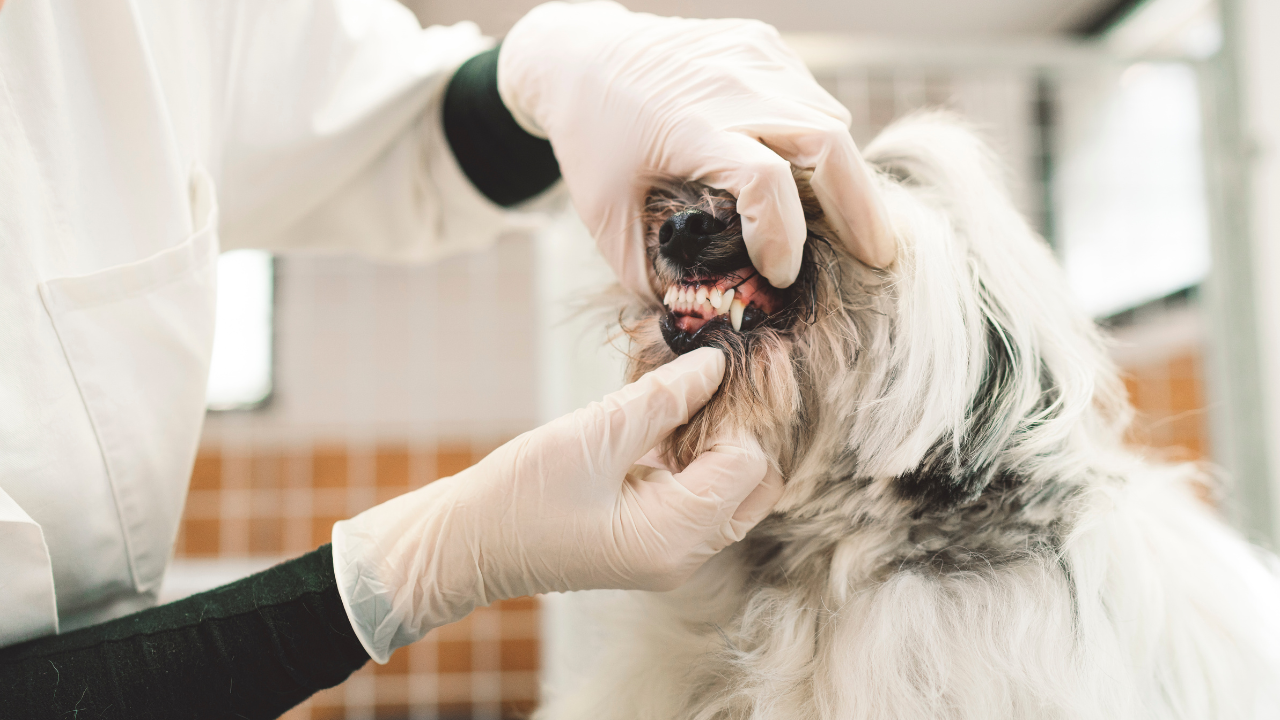
If your dog’s breath makes you turn away during cuddle time, it may be more than doggy breath. Strong, lasting bad breath is often the first sign of a dental problem, and it is not something to accept as normal.
Many dogs and cats have some degree of dental disease by age three, and because pets hide pain so well, it is easy to miss.
Not sure if your pet needs dental cleaning? Call Park Road Animal Hospital at (980) 981-4334 and our team can evaluate your pet’s teeth and gums.
7 Signs Your Dog or Cat Needs a Dental Cleaning
Pets can’t tell us when their teeth hurt, so here are seven common signs that it may be time to schedule a dental exam.
1. Persistent Bad Breath
Bad breath in dogs and cats can be associated with plaque, tartar, gum inflammation, or periodontal disease. If your pet’s breath has become noticeably worse, it is worth having their mouth checked by a veterinarian.
2. Yellow or Brown Tartar on the Teeth
Plaque builds up on the teeth and hardens into yellow or brown tartar, usually along the gumline.
Brushing cannot remove tartar once it forms. A professional dental cleaning allows your veterinary team to remove tartar above and below the gumline and thoroughly evaluate your pet’s oral health.
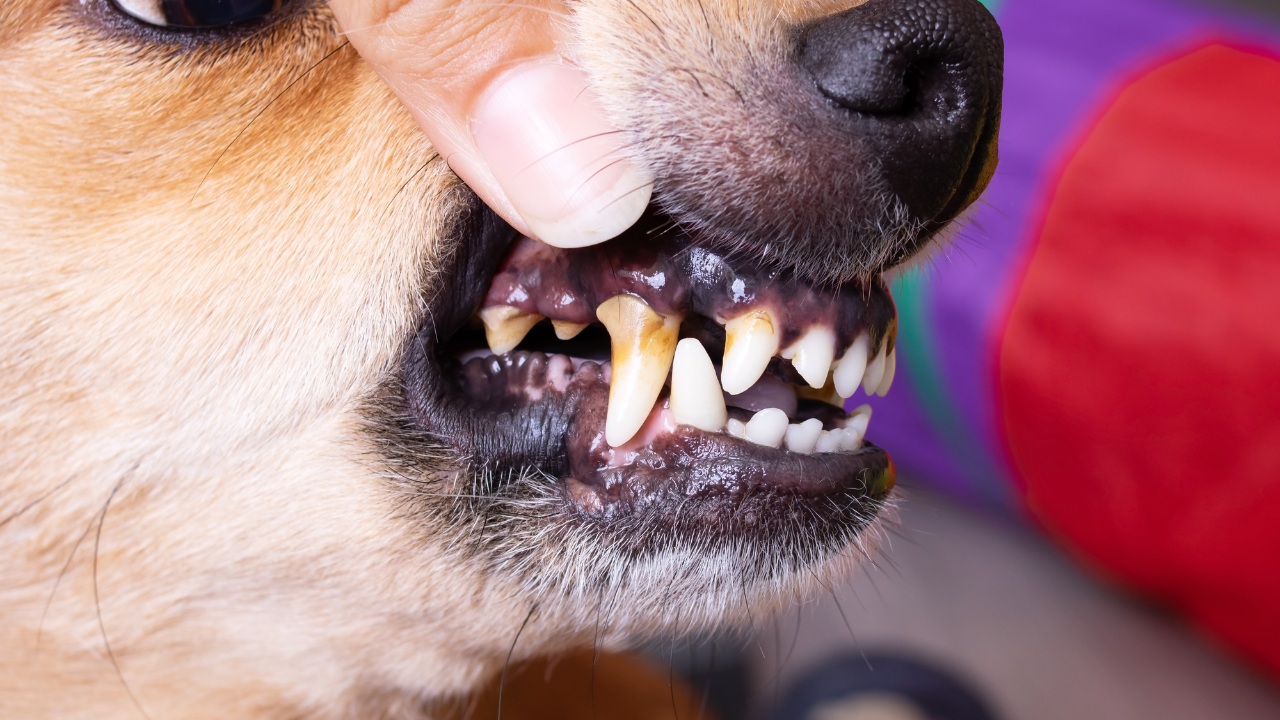
3. Red, Swollen, or Bleeding Gums
Healthy gums should not consistently look red, swollen, or bleed when your pet eats.
Inflamed gums can signal gingivitis or early periodontal disease, and catching it early means simpler treatment.
4. Trouble Chewing or Eating
You may notice your dog chewing more slowly, dropping food, avoiding hard kibble, chewing on one side of the mouth, or suddenly preferring softer food.
Cats are more subtle with showing any signs of discomfort. They may eat less, chew with their head tilted, or walk away from the bowl.
5. Excessive Drooling
Some pets naturally drool more than others. A sudden increase in drooling, especially with a bad smell or traces of blood, often means something is bothering your pet’s mouth.
6. Pawing at the Mouth or Rubbing the Face
If your pet repeatedly paws at their mouth, rubs their face against furniture, or seems uncomfortable when their face is touched, it often points to mouth pain.
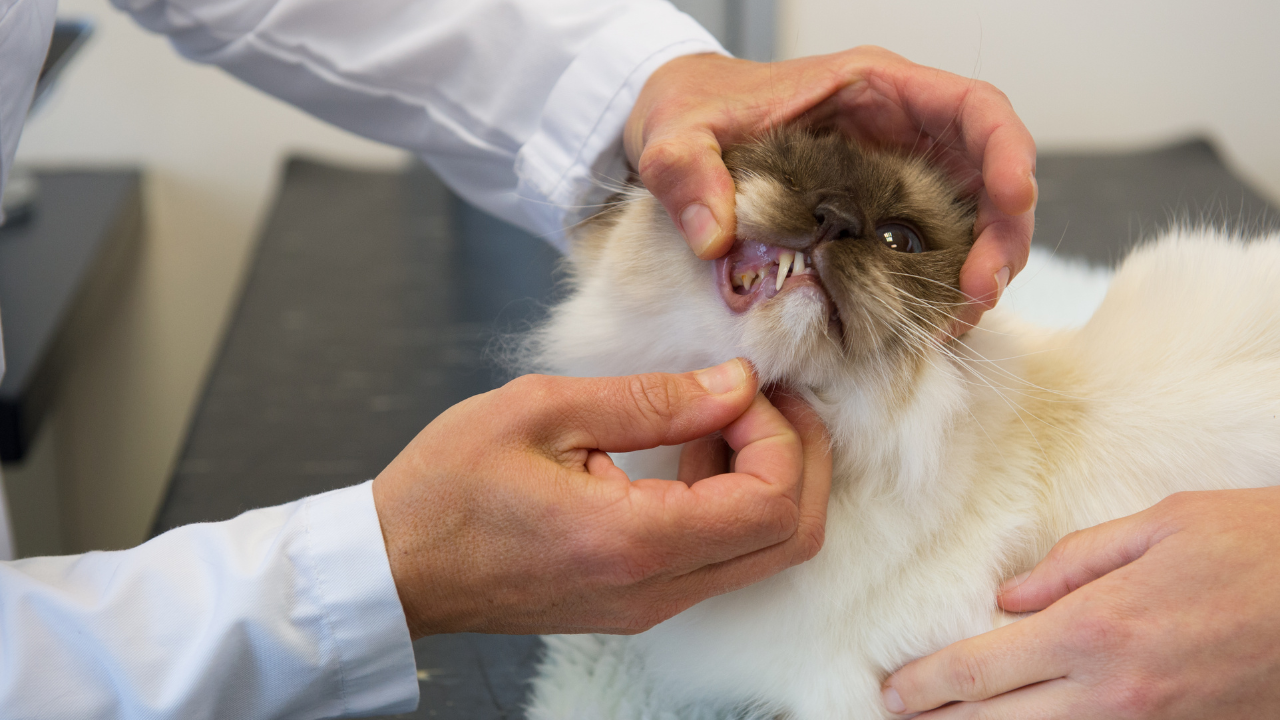
7. Loose, Broken, or Missing Teeth
If you notice a loose, broken, or missing tooth, schedule an exam right away. These problems do not resolve on their own and are often painful.
Recognize one or more of these signs? Call (980) 981-4334 to book your pet’s dental exam at Park Road Animal Hospital.
Why Dental Disease Is More Than a Bad Breath Problem
Periodontal disease in dogs and cats can cause pain, inflammation, tooth loss, and difficulty eating.
In advanced cases, bacteria from the mouth can enter the bloodstream and affect the heart, liver, and kidneys.
The goal is not just cleaner-looking teeth. It is a comfortable pet that eats well and stays healthy. Your veterinarian also checks the teeth and gums at every wellness exam, which is one more reason routine visits matter.
What Happens During a Professional Pet Dental Cleaning?
Nervous about a dental procedure? Knowing what happens can make the decision easier.
A professional dog teeth cleaning or cat dental cleaning involves much more than simply brushing the visible surfaces of the teeth.
Depending on your pet’s needs, a cleaning may include:
- A full exam of the teeth, gums, tongue, and mouth
- General anesthesia, so the veterinary team can safely examine and clean your pet’s mouth
- Digital dental X-rays to see the roots and bone below the gumline
- Removal of plaque and tartar
- Cleaning below the gumline
- Polishing the teeth
- Evaluation for damaged, loose, or diseased teeth
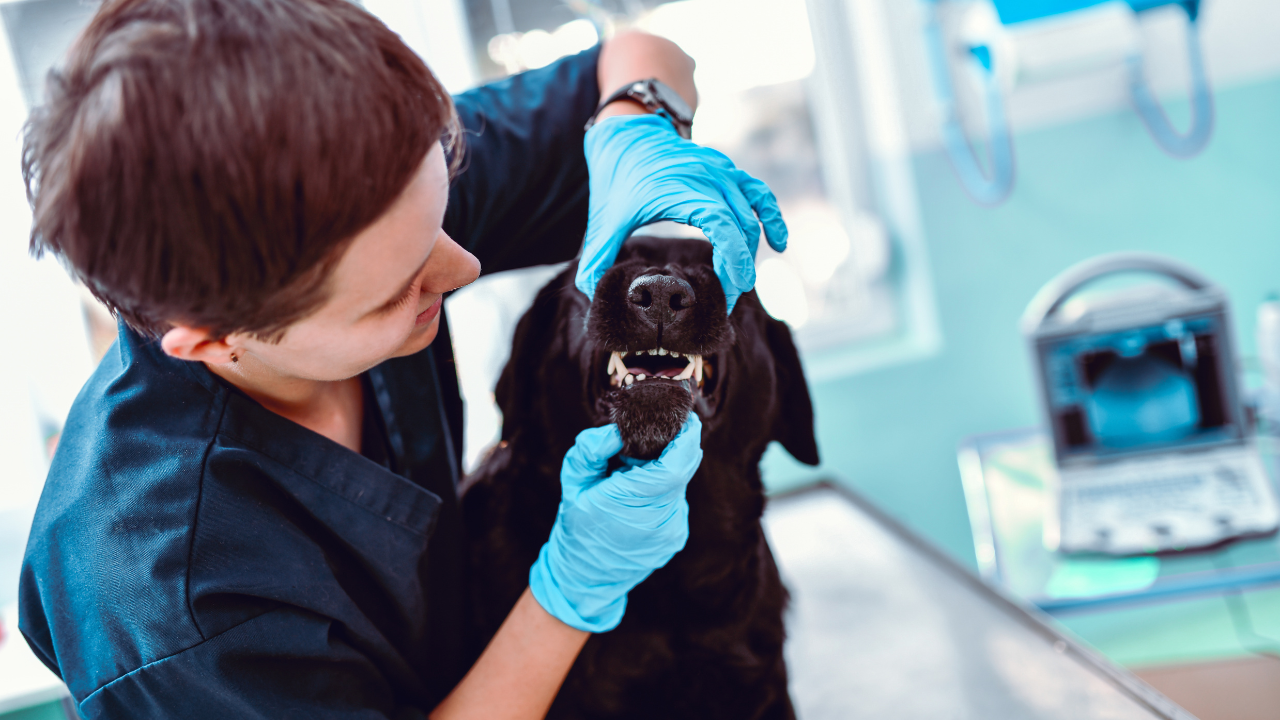
To see how our team handles every step, visit our pet dental care in Charlotte page.
Anesthesia-Free Dental Cleaning vs. Professional Veterinary Dental Care
Anesthesia-free dental cleaning may remove visible tartar from the tooth surface, but it does not provide comprehensive veterinary dental care.
Without anesthesia, it is not possible to clean below the gumline or take dental X-rays, which is why the American Veterinary Dental College does not recommend it.
Worried about anesthesia? Our team will explain how your pet is monitored and answer every question before the procedure.
How Can You Help Keep Your Pet’s Teeth Healthy at Home?
Between cleanings, you can protect your pet’s teeth by:
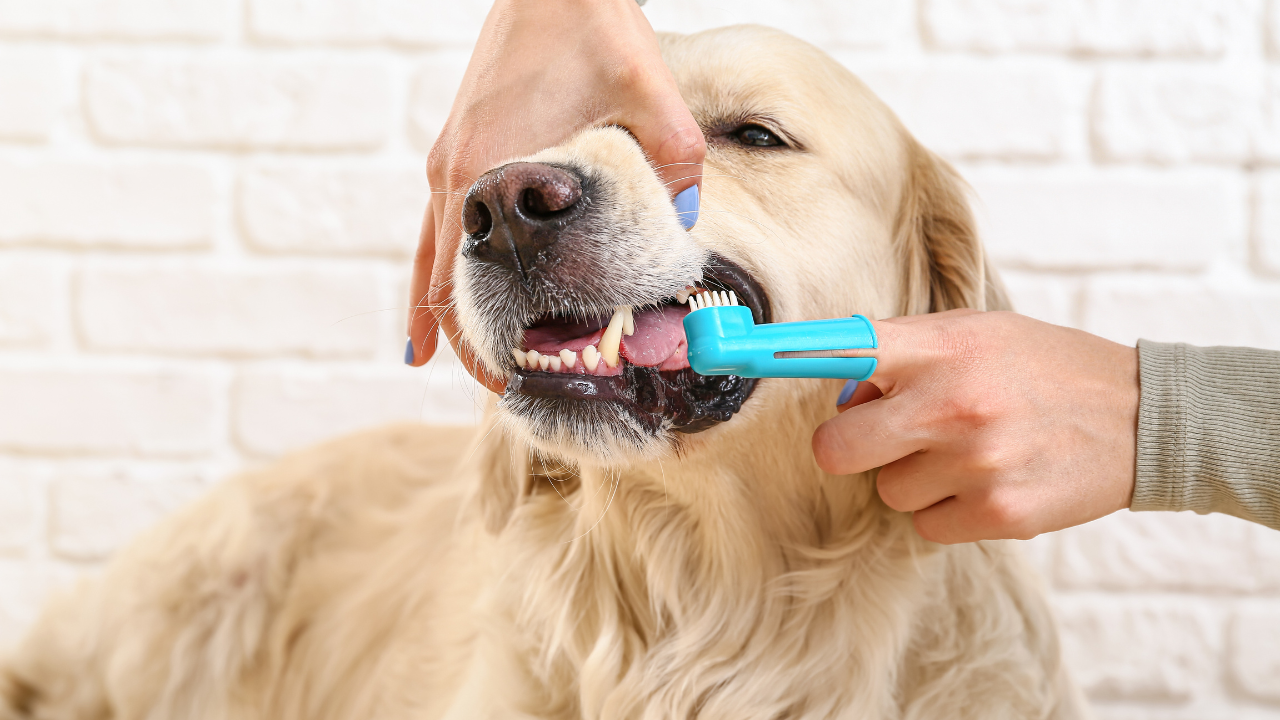
- Brushing regularly with pet toothpaste
- Using veterinarian-recommended dental chews or products
- Checking your pet’s mouth periodically for changes
- Keeping up with routine wellness exams
Do not use human toothpaste on your pet. Some ingredients can be harmful to animals.
Check Your Pet’s Teeth Before a Small Problem Becomes a Bigger One
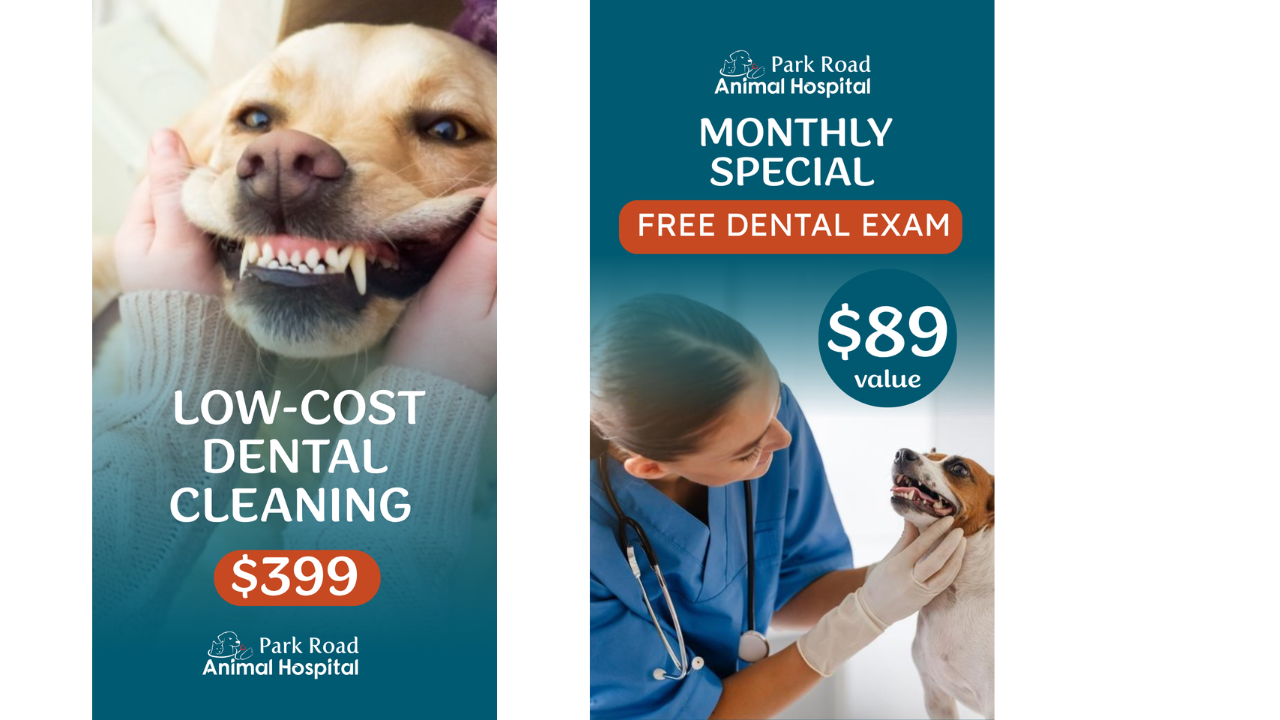
Park Road Animal Hospital currently offers a FREE Dental Exam ($89 value) and a $399 dental cleaning special.
Offers change monthly, so check our Monthly Specials page for current pricing, or call (980) 981-4334 to reserve your spot.
Not sure your pet needs cleaning? A free exam is the easiest way to find out.
Frequently Asked Questions About Pet Dental Cleaning
Q: Do dogs and cats actually need dental cleanings?
Yes. Most dogs and cats have some dental disease by age three, and tartar cannot be removed by brushing alone. Common signs your pet needs a dental cleaning include bad breath, tartar, and red gums.
Q: How often should dogs and cats have their teeth cleaned?
It depends on your pet’s age, breed, and oral health. Many pets need a professional cleaning about once a year, and small breeds may need them more often.
Q: How do you get rid of bad breath in dogs?
Treats and sprays only mask the smell. Bad breath can be a sign of dental disease, including plaque, tartar, or gum inflammation. A veterinary dental exam can help identify the cause and determine whether your pet needs professional cleaning or other treatment.
Q: What dissolves tartar on a dog’s teeth?
No chew, spray, or water additive can dissolve hardened tartar. It has to be removed with a professional dog teeth cleaning, and regular brushing helps keep it from coming back.
Q: Can a vet clean my dog’s teeth without anesthesia?
Not completely. Anesthesia-free dental cleaning only removes visible tartar. It cannot reach below the gumline, where most dental disease develops, or allow dental X-rays.
Q: How much does a pet dental cleaning cost in Charlotte, NC?
Cost depends on your pet’s size, age, and whether X-rays, extractions, or other treatment are needed. Park Road Animal Hospital runs monthly dental specials, so check our Monthly Specials page or call (980) 981-4334 for current pricing.
Q: Is it safe for a senior dog or cat to have a dental cleaning?
Age alone is not a reason to skip dental care. Your veterinarian will check your pet’s overall health before recommending anesthesia, and many older pets eat and feel better once painful teeth are treated.
Schedule Your Pet’s Dental Exam in Charlotte, NC
Park Road Animal Hospital provides veterinary dental care for dogs and cats in Charlotte, NC 28209, including pets in Park Road, Myers Park, Montford, SouthPark, and nearby Charlotte communities.
Call (980) 981-4334 or request an appointment online to schedule your pet’s dental exam.
A healthier mouth means a happier, more comfortable pet, and it starts with one dental exam.

Recent Post
The holiday season brings warmth, family gatherings, and plenty of